
High-Speed GPR Array Explained: How It Works and How GPRS Applies It
The Advanced Technology of the GPR Array Along with GPRS’ Existing Operations Provide Highly Accurate Subsurface Maps Clients Can Rely On
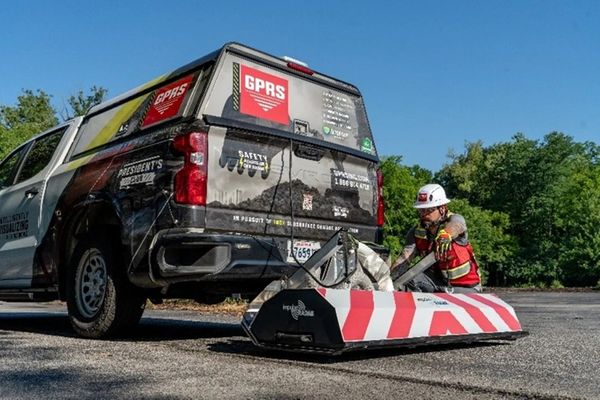
[This is an excerpt from High-Speed 3D GPR Array: What Is It and How Can It Help Your Next Project?]
The GPR array can be most useful anywhere you would need to map miles of utilities quickly. Anywhere from highways and right-of-ways to pipelines and wind farms, the high-speed 3D GPR array can help.
Understanding the location of underground utilities is vital when planning a construction, renovation, or restoration project. And if your next project involves miles of road or hundreds of acres of land, the GPR array is your secret weapon to show you what you need to see when you need to see it.
Once the scans are completed, CAD technicians, like GPRS’ in-house Mapping & Modeling team, analyze all of the data to find the utility data, so they can extract those lines and create deliverables like CAD drawings and utility maps. This takes several passes and the use of specific types of software, so it’s always vital to have professionals perform this task to ensure they translate the data accurately.
Once the scan data is “cleaned up,” the subsurface utility maps and information are uploaded to SiteMap® (patent pending), GPRS’ cloud-based infrastructure platform that helps you manage your build world. With SiteMap, all your underground utility data is securely stored in one place and is geospatially accurate to allow for enhanced analysis and collaboration capabilities.
Read the whole article at https://www.gp-radar.com/article/high-speed-3d-gpr-array-what-is-it-and-how-can-it-help-your-next-project